I think we are currently going thorough another great time in history right as I am writing this. While most people would lament the fact that AMD has been lagging behind Intel for quite some time I think it is a grate time. This is a point in history that will be remembered for one of the grate turning points and discovery of new technologies. While I can’t predict the future, I can always look at the past and notice the similarities to what has happened before.
Why competition is good
If you have been following the PC hardware market for long enough you are sure to remember the early 2000s. Back then processor clock speed was the name of the game and who could manage to get the highest frequency CPU was the winner of the processor battle and was crowned king. Basically we needed 28 years to go from 100 mHz to 1GHz but we only needed 18 moths to go from 1GHz all the way to 2 GHz. Those were great times. Processor speeds were the indicator of performance and everyone bought accordingly.
By the end of 2002 we have effectively reached the limits of what increasing clock speed could do with the advent of the Intel Pentium 4 3.06GHz processor. Even Intel knew that higher frequency wasn’t all that cracked up to be and added Hyper-Threading to this processor. We had effectively reached the limit of how fast a silicone chip could safely change states from a 1 to a 0. Any faster than that and we would be clashing with the laws of physics or would be getting unreliable results. AMD realized this and decided to add more instruction per CPU clock cycle. Their CPU names were marketed as equivalent to Intel processor frequency even though they ran at much lower frequencys. As an example the AMD Athlon 3200+ was “rated” at 3,2Ghz but it actually ran at 2,2GHz. Quite a big deal back then.
AMD quickly noticed that quicker clock speed was a problem. It had to find a way to improve performance and in 2003 decided to cram more instructions in the same clock cycle effectively doubling the processors speed with the launch of the Athnlon 64. It could run a 64-bit instruction set and also featured integrated memory controllers for faster response times. Intel quickly followed suit creating the almost identical EM64T architecture. Intel didn’t integrate the memory controllers until the much later released Core i-Series. From now on further every piece of software would have to be written on the 64-bit instruction set to be able to get the most out of the available hardware.
By 2005 Microsoft released the Windows XP 64-bit operating system as a response. It was a very quick and dirty improvement over the regular 32-bit XP but it was indeed capable of using the entire capability of the newest CPUs available on the market and did lead to improved performance compared to the 32-bit versions.
In 2005 Intel noticed that its Hyper-Threading technology was paying off big time and introduced the first Pentium D processor which was the first dual core processor available to PCs. AMD quickly followed suite with the launch of the AMD Athlon 64 X2 the same year. The multicore battle had begone.
Not even 1 year later Intel introduced the Core 2 Duo extreme, the first quar-core processor for PCs, which featured 4 individual CPU cores on the same socket. One year later AMD released their Phenom line of processors. These were the first quad-core processors with all the four cores on the one single die.
In 2010 Intel released the Intel Core i-Series with up to 6-core processors. AMD quickly responded with the Phenom II line of processors.
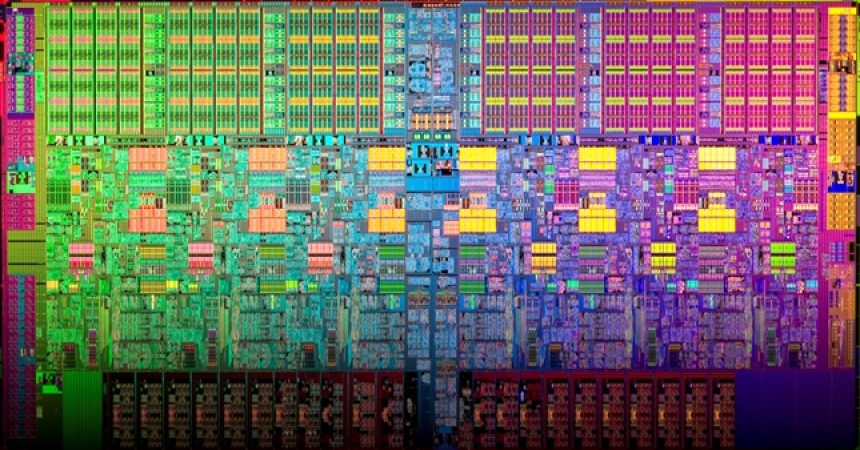
This entire multicore battle went on all the way to the current Intel Xeon E7-8890 v3 running 18 cores on the same die. Not many users can afford the 7000+$ price tag for such a processor but it proves the point that we have reached another bottleneck in processor development cycle.
If you look at the past you quickly notice that once one improvement in technology was discovered by one manufacturer the others quickly followed suite and copied it, or improved it and took it to the next level.
Where we are right now
We are currently at another low point of the PC hardware evolution process. Just as cramming more GHz under the same die in the past proved to be inefficient, we are now struggling with getting more performance while lowering energy consumption. Both CPUs and GPUs have not seen much improvement in recent years and the discovery of a new technology is deeply needed.
Intel has been using their Tick-Tock architecture release schedule for almost a decade now but have been forced to switch it up this year and add another step. They have realized that just shrinking the die size and changing the architecture aren’t enough. Going any smaller or adding any more features to the CPU just isn’t leading to better results and they need to find something else.
AMD has mostly stayed in the background for the past couple of years. They are mostly running the same CPU/APUs from a couple of yeas ago with minor overclocks in a effort to keep up with Intel. They have announce that they will be releasing the new Zen architectures, but as of yet there hasn’t been anything new out there from AMD. Thankfully AMD has been working with console makers and is focusing on VR technology, so I expect we will get something new soon.
While most executives take the stage at public gatherings declaring that they can’t really keep up with Moore’s law anymore and they need to slow down, I think that the same thing would have been said back in the early 2000s. Yes, we have reached another limit of what the technology we are currently using can do, so we need to become creative again and develop something better. It obviously won’t come from following the same trend as up to this point, so we need to look at improving other areas.
What the future holds
I honestly don’t know what the future will hold and what they will come up with next. The fact of the matter is that we have currently reached a bottleneck in performance and we need to get over it. If it were based on my best guess, I would guess that the next evolutionary step would be following what GPUs and cloud servers have been doing for a while now and moving to more compact, slower, and higher in number processing units. Even the GPU market itself has started to run into a bottleneck and I expect very big improvement in the GPU sector as well. AMD recently released the 2-GPU AMD Radeon Duo designed specifically for playing and designing VR games. Is it good for most people, not really, is it good for its intended purpose, sure. I honestly do hope VR picks up. It seems like the next step in evolution but like the VR examples of the past, it might still be missing that one feature nobody is thinking about and be a very close miss. I think we now do have the necessary hardware to deliver a good VR experience, but the only thing still missing is reliable movement. We’ll see how this plays out in the next year or two. Maybe VR adult entertainment will lead the way to newer and better technologies as it did with the internet and other technologies. Who knows.
I think the next step in evolution will be in multiple slower cores (say 200-300+ Cores) running in a cluster style format running under an abstraction lawyer that make them seem like a single CPU. I honestly don’t know, but I sure hope AMD picks up their game and gives Intel and nVidia a run for their money. This healthy competition has in the past lead to a lot of todays technologies we take for granted and couldn’t do without.
Another big area of evolution for PC hardware might be quantum processors. I think they are still in their early stages of development, but it wouldn’t surprise me if we would be going in this direction as well. By the sheer fact that Google is investing a lot of cash in this direction I think this might be a big deal in the future. Maybe not now, maybe not in the next couple of year, but soon.
I can’t wait to see what the next couple of years will be like and what the next big step in technology will look like. These are some great times we live in.