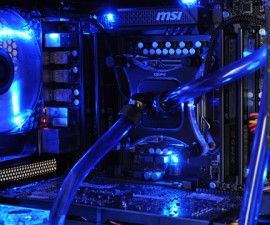
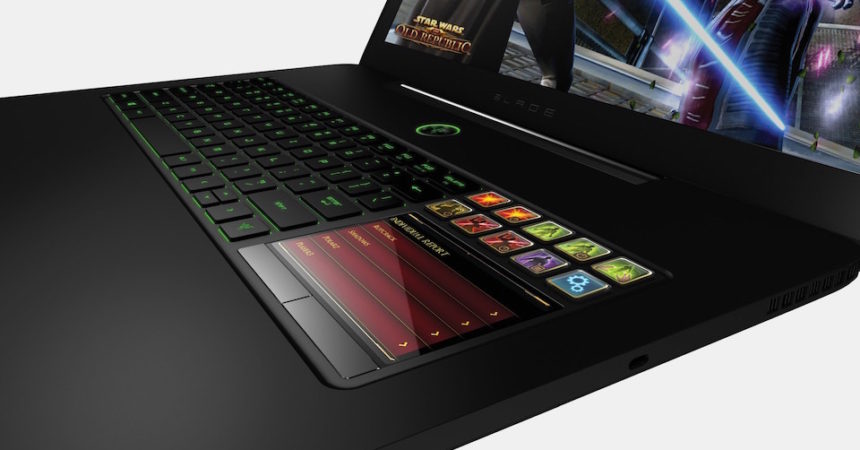
I’ve recently had someone ask me why they should buy the more expensive “gaming laptop” when they can buy a much more affordable “regular model” with a very similar configuration. I quickly realized this question comes up often enough to warrant a post describing the differences and advantages of gaming laptops.
Gaming on a laptop
First, let’s start off with what happens when you play games on a gaming laptop for a prolonged span of time.
Gaming in general constantly requires large quantities of processing power for as long as the gaming session lasts. You have to constantly load the next scene or section of a map. You have to constantly render new frames as the characters move around. You have to constantly read new information from the hard drive to prepare for the next scene. Your CPU has to constantly process what all the AI and NPCs are doing and how they are reacting every second.
You’re talking about running large amounts of processing power through a very compact, mobile device and doing this for a couple of hours on end. All this performance has a very high power draw and creates large quantities of heat. If you were using desktop computer grade components in laptops they would melt or burnout in ten minutes flat, hence you need mobile components.
Mobile PC components
The components inside a laptop do exactly the same thing as their desktop counterparts, they just have to work under completely different conditions. The space inside a laptop is very limited and manufacturers can’t always find the necessary space to fit everything inside. Cooling of high performance parts is usually an issue in laptops. You can’t really run a laptop at a constant 100% load for very long before it starts to throttle the available performance.
The available power you can draw is limited to how big of a battery can fit inside the laptop and how fast it can discharge. The amount of power you can draw is also limited by the battery capacity. You generally want at least a few hours of battery life from a laptop. So how much power you can actually use with the components is severely limited.
This is why most mobile PC components are optimized for very small power draws and have to be very efficient so as to not create to much heat or use much energy. All these limitations also lead to the rather large difference in performance compared to their desktop equivalent parts.
Laptop configurations
Because of the limitations of building a high performance laptop most “regular laptops” and business class laptops are built in such a way that they have very high burst performance but generally lack sustained performance. Not quite what you are looking for in a gaming laptop. You need sustained perferomance.
Most people don’t need to constantly run the CPU at full load all the time, they just need to load up a program fast, for a couple of seconds. They need to run a function inside a program for a couple of minutes. The same goes for GPUs. They need a quick rendering session and then it’s off again. Most CAD applications don’t load GPUs that much. They also load in bursts of data.
So most regular office and productive work is usually not an issue for a laptop. This usage is nowhere near the demands of a gaming session for constant processing.
The displays that come with most laptops aren’t usually designed for fast response times. They also tend to be low resolution, low color accuracy solutions due to cost cutting. They just have to be functional and get the job done. The same can be said about keyboards, touchpads and speakers. They all need to be functional and affordable.
Enter the gaming laptop
It is true that in the past and even in more recent times, some laptops branded as “gaming laptops” are just regular models with different colors and other design ques. That’s why you need to be informed and know what the difference is and what to look for.
A decent gaming laptop is designed to solve most of the problems that come up on regular laptops during a prolonged gaming session. They also are designed to create a much more pleasurable gaming experience overall.
Cooling
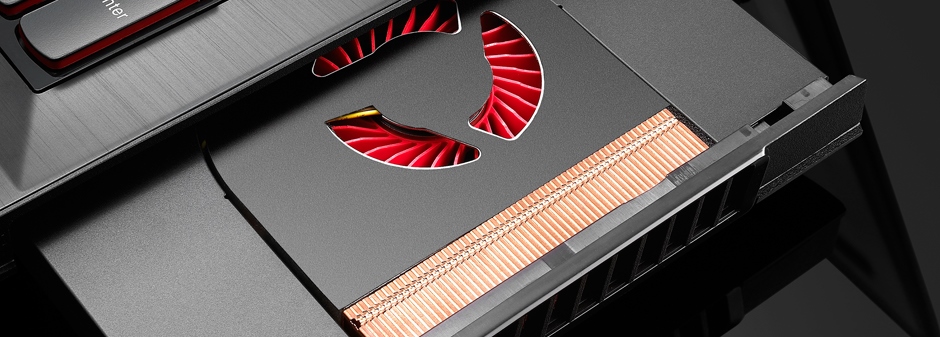
The main issue with gaming on a regular laptop has always been cooling the thing. You want to be able to play a game for more than 15 minutes before the laptop starts to thermal throttle on you. You also don’t want to get your hand burned or sweaty because the entire body has become toasty.
This is the first thing I look at when I evaluate a gaming laptop. A good gaming laptop nowadays has at least 2 fans with very large cooling openings and oversized cooling fins. Because of the oversized cooling these same laptops can be built with much faster components. Because the cooling is enough they don’t get that hot during operation.
Well designed cooling system doesn’t blow the hot exhaust air on the sides where you might have your hands. They also don’t need to run the fans at full speed under load. They have built in reserves to handle even the worst possible scenario.
All this extra cooling hardware has the drawback that it makes gaming laptops a lot bulkier and heavier compared to regular laptops. There are some slim gaming laptops out there, but not many.
Components
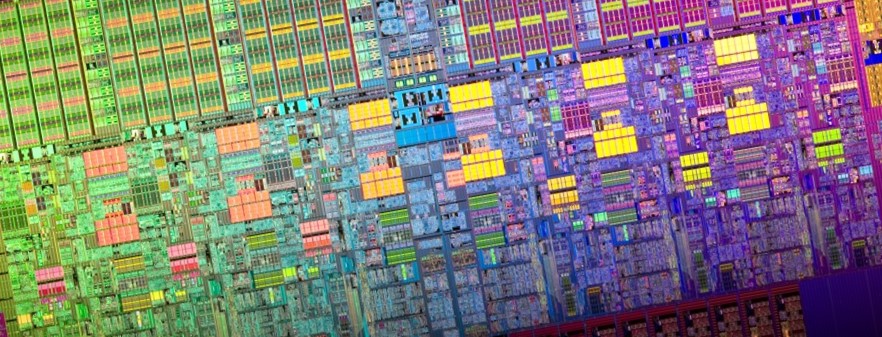
Because the main issue and limiting factor, the cooling, is taken care of, you can now install much more powerful components. Even with identical configuration a gaming laptop outperforms a regular laptop because of its ability to sustain the load for longer. The most components have a much higher base clock than usual.
The big power gain comes when you stop installing low voltage, low power components and install high performance, more power hungry parts. That’s where the big jumps in performance show up. The difference in performance between a nVidia GT940M, like you would find in most regular laptops and a GTX950M is nearly double. The power draw also jumps from 25W to over 50W. This is just by going one step higher in the same family of mobile GPUs. The GTX950M also comes in different flavours with different clock speeds to better match the laptop’s cooling ability. The new 1000 series family of GPUs promisses a higher performance jump than in the past while keeping power draws small.
CPUs also show very similar behaviour. You have the ultra low voltage variants of the i5 and i7 with around 15W TDP that quickly becomes 45W for the more powerful models. Oversized cooling becomes quite an important issue once you effectively double the heat and power production on 2 majour heat producing components.
Peripherals
When you end up paying nearly double the price of a regular laptop for a gaming laptop you have the necessary budget for superior peripherals. Most gaming laptops have superior displays with higher resolutions, better response times and better color accuracy. High resolution IPS-screens are the norm in the gaming laptop category.
They tend to have better sound systems as well. Some come with a built in subwoofer and 4 speakers. They all have some form of software and hardware wizardry that makes everything sound better.
Most of them come with better keyboards and touchpads. The components you actually touch and use every day are of better quality than normal. Backlighting has become a standard on all of them.
Some laptops even come with additional programmable keys. You can use these keys for shortcuts and key combinations you can bind for individual games.
Eyecandy and design
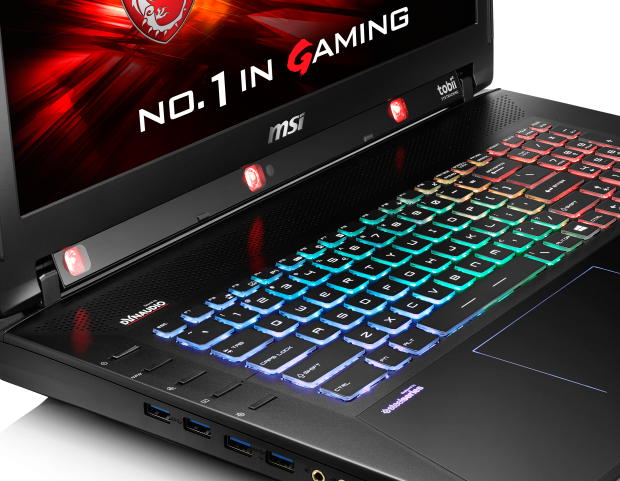
While I don’t really care about flashy colors and lights, many people do. The higher available budget allows for some gaming laptops to come with very interesting designs. Lights and LEDs wherever they can be crammed in. Some lighting is used for design cues with lines and cuts lighting up and some just light up keyboards and touchpads with whatever color you feel like.
You can get a nearly infinite combination of colors and combinations. Backlit touchpads, no problem. Glowing logos and branding, no problem.
Most high end laptops come with a whole bunch of branded accessories, like rucksacks and carrying cases, mice, cleaning kits, headphones and so on.
I honestly think that some of these are just a way to justify the much higher price point than stuff you might actually need.
Compromises
Gaming laptops are a big compromise both compared to a desktop PC and a laptop PC. They are somewhere in between. With a gaming laptop you don’t get the battery life and mobility of a regular laptop. Those high-power component need a lot more electricity to do their job and the built in battery is still the same size.
While the components are high performance parts, they still are mobile components. They will never match their desktop equivalent in terms of raw performance, but they do get the job done.
You also need to consider the weight of the thing. That extra cooling, components and higher quality beefier frame all add more weight to the laptop. This also limits how much you would be inclined to carry it with you.
In conclusion
In conclusion I hope you understand the difference between a regular high powered laptop and a gaming laptop. The gaming laptop is specially built for the job of gaming, while a regular laptop is designed to be an overall good machine for everyone. The gaming laptop is a much more powerful laptop in every aspect, but it has to compromise on the main feature of laptops, mobility.
If you are going to do gaming on a laptop it is best if it is a gaming laptop. You won’t have cooling problems. You’ll get a better experience because of the better display and sound system. The performance of the gaming laptop will be typically higher than most business class high performance laptops.